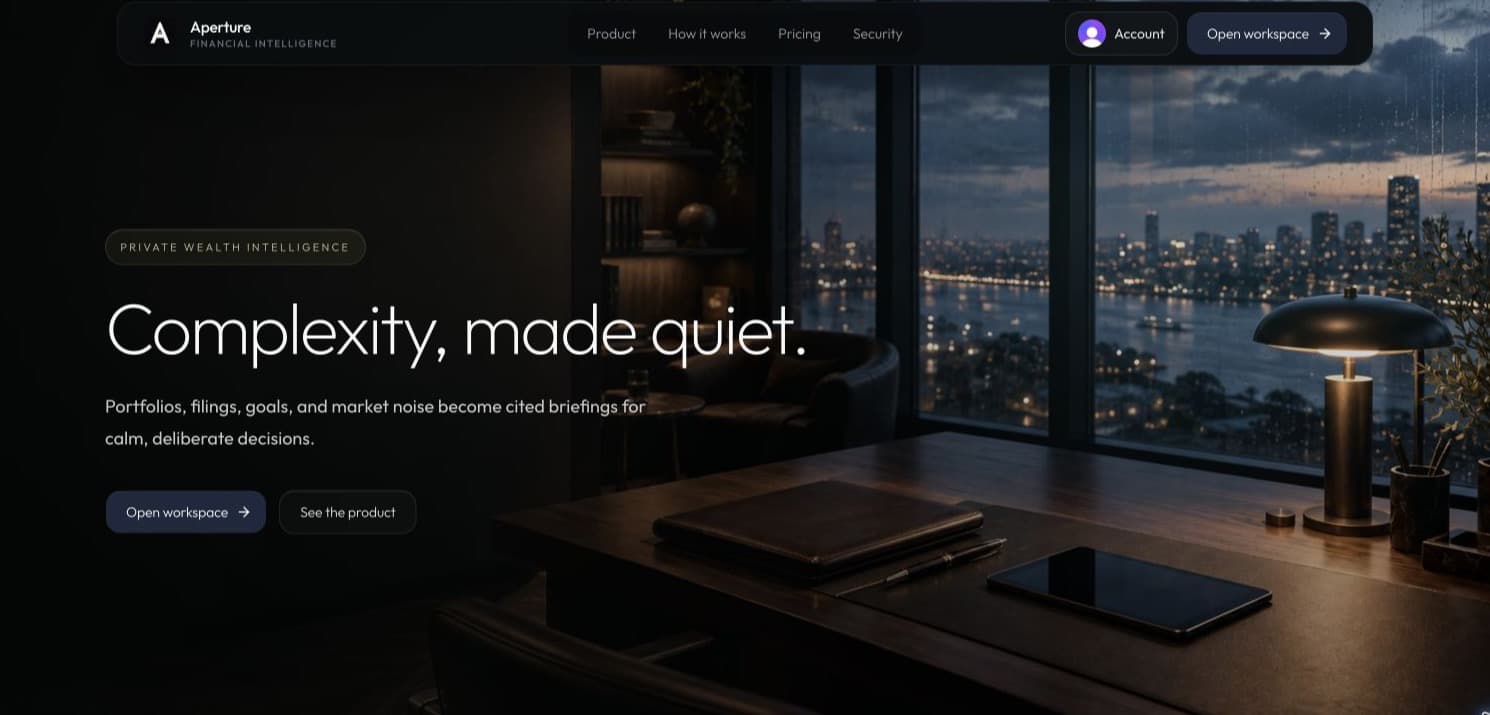
Fintech systems + trustworthy AILive product preview
Aperture Financial Intelligence
From market context to a research note you can inspect
View case study
A rough travel idea.
A route you can explain.
I designed and built a planner that turns travel wishes into complete journeys you can compare, save, and share.
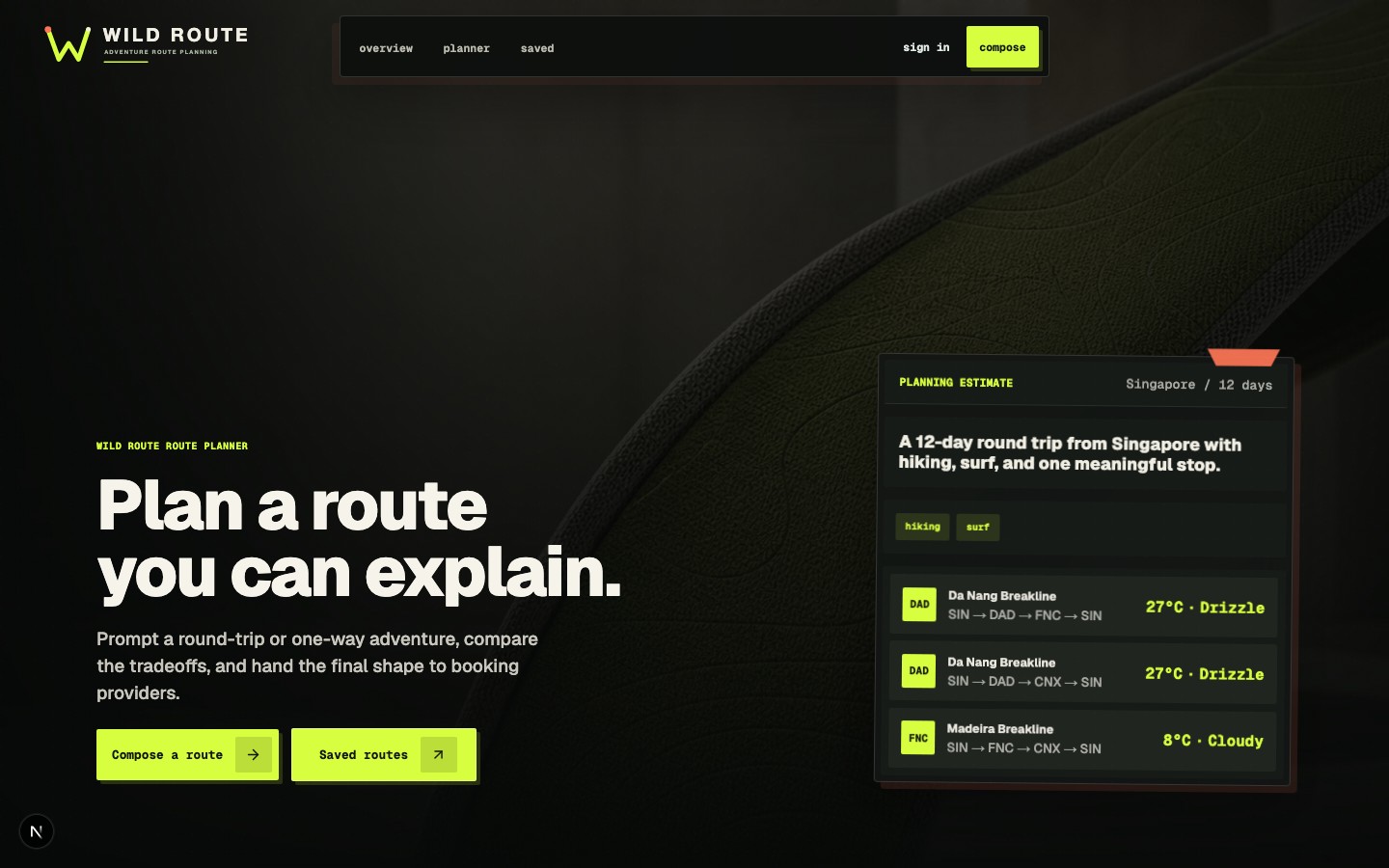
The current product: a travel brief, comparable journeys, and an explicit planning-estimate boundary. Select any screen to view it full size.
Flights, maps, destination guides, and notes each show a fragment of a trip. I wanted to bring those fragments into one decision: which route fits the adventure?
The hard part was making the result useful without overstating what the app knows. Every journey needs a reason, a return leg, and a clear boundary between a planning estimate and a booking.
A plain-language idea becomes a brief you can edit. Origin, days, stop count, and route shape stay visible before composition.
“A 12-day round trip from Singapore with hiking, surf, and one meaningful stop.”
The example used in these captures. Deterministic interpretation and route data; no live model call.
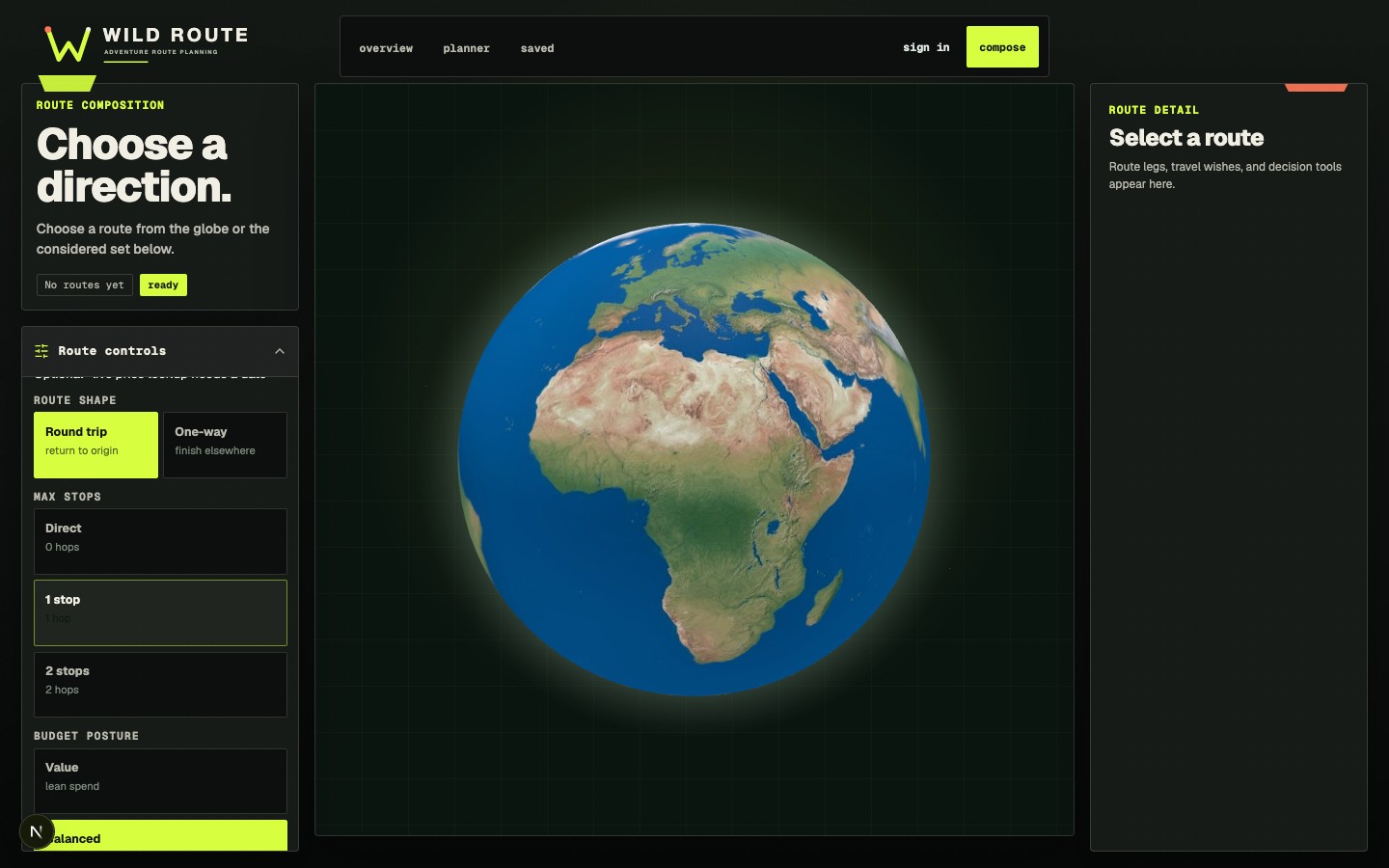
The engine compares direct, one-stop, and two-stop journeys. Round trips return to the origin, and the map follows the same legs as the route details.
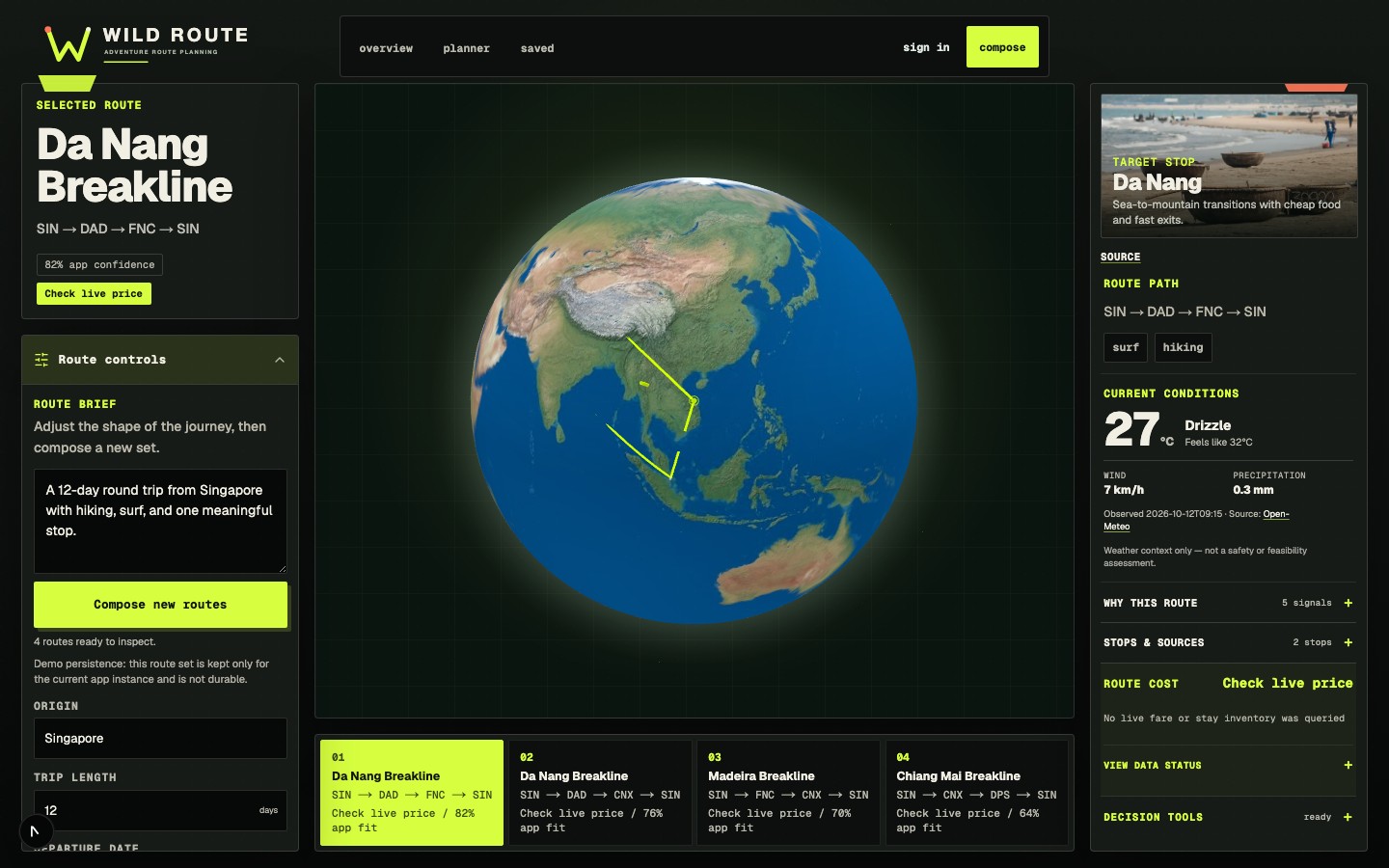
Ranking, wishes, and confidence explain the suggestion. Confidence belongs to the app’s scoring, not a provider guarantee.
Current conditions keep their source and observation time. Missing fare observations stay labeled as planning estimates.
A 2D map and bundled destination artwork keep the route usable when WebGL or remote media is unavailable.
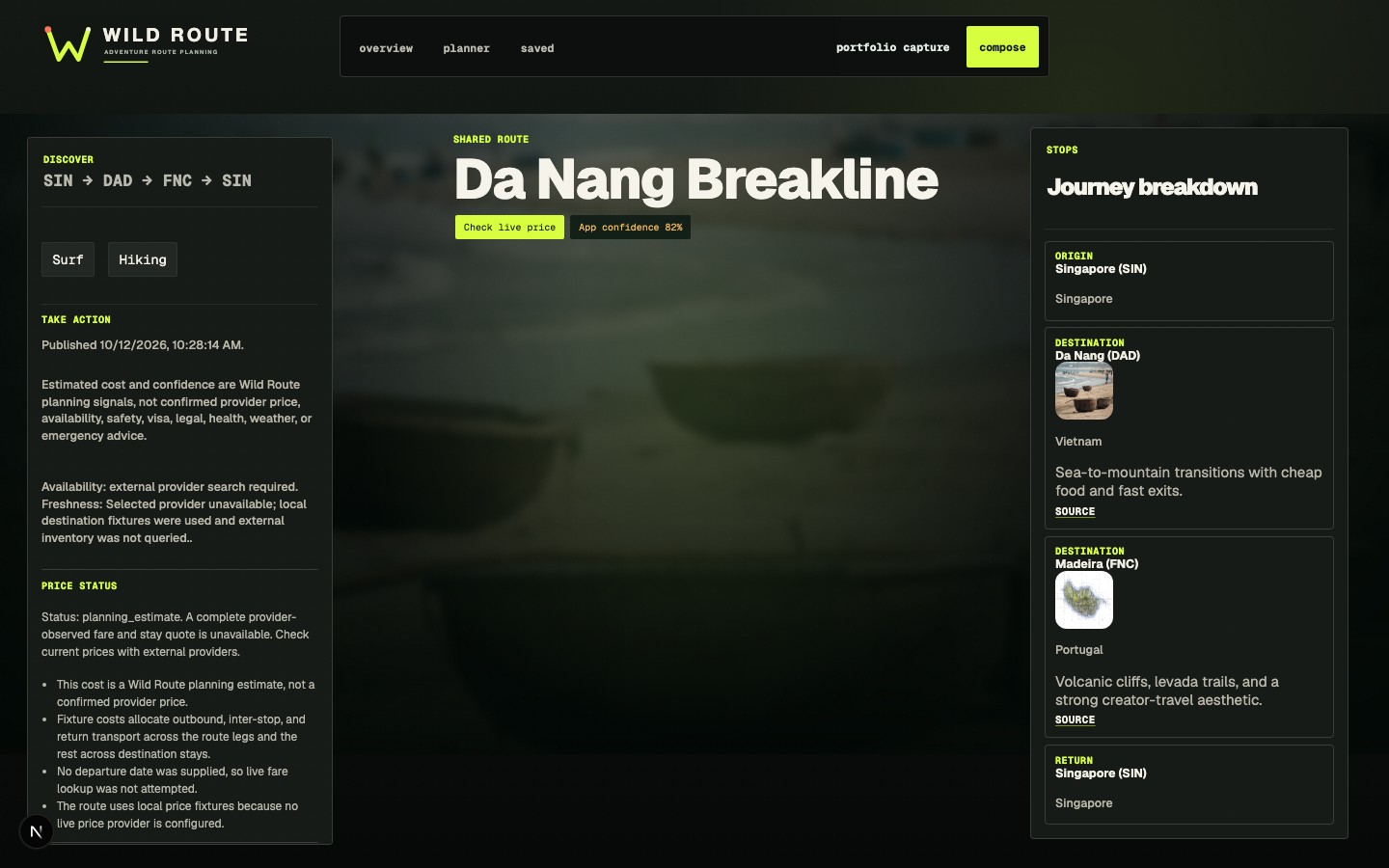
Save a route for later or share a public preview. The original prompt stays private; the shared view carries the journey and its planning caveats.
Booking links continue on external provider sites. Wild Route helps choose the journey; providers confirm availability and final prices.
In the public demo, saves live in this browser and preview links reconstruct a validated public route. Cross-device account persistence remains a separate managed-service path.
I owned the product direction, interface, route engine, API boundaries, and verification. The key decision: let deterministic code own route shape, arithmetic, permissions, and the final validated result.
The first hosted save flow assumed the next request could read the same server’s memory. Serverless hosting broke that assumption. I rebuilt the demo around browser-local saves and validated stateless previews.
Keyboard access, reduced motion, provider fallback, and image failure are part of the experience. Private data stays behind ownership checks; public shares use an explicit safe snapshot.
Explore the other current projects where product thinking is carried through interface, architecture, testing, and release.
From market context to a research note you can inspect
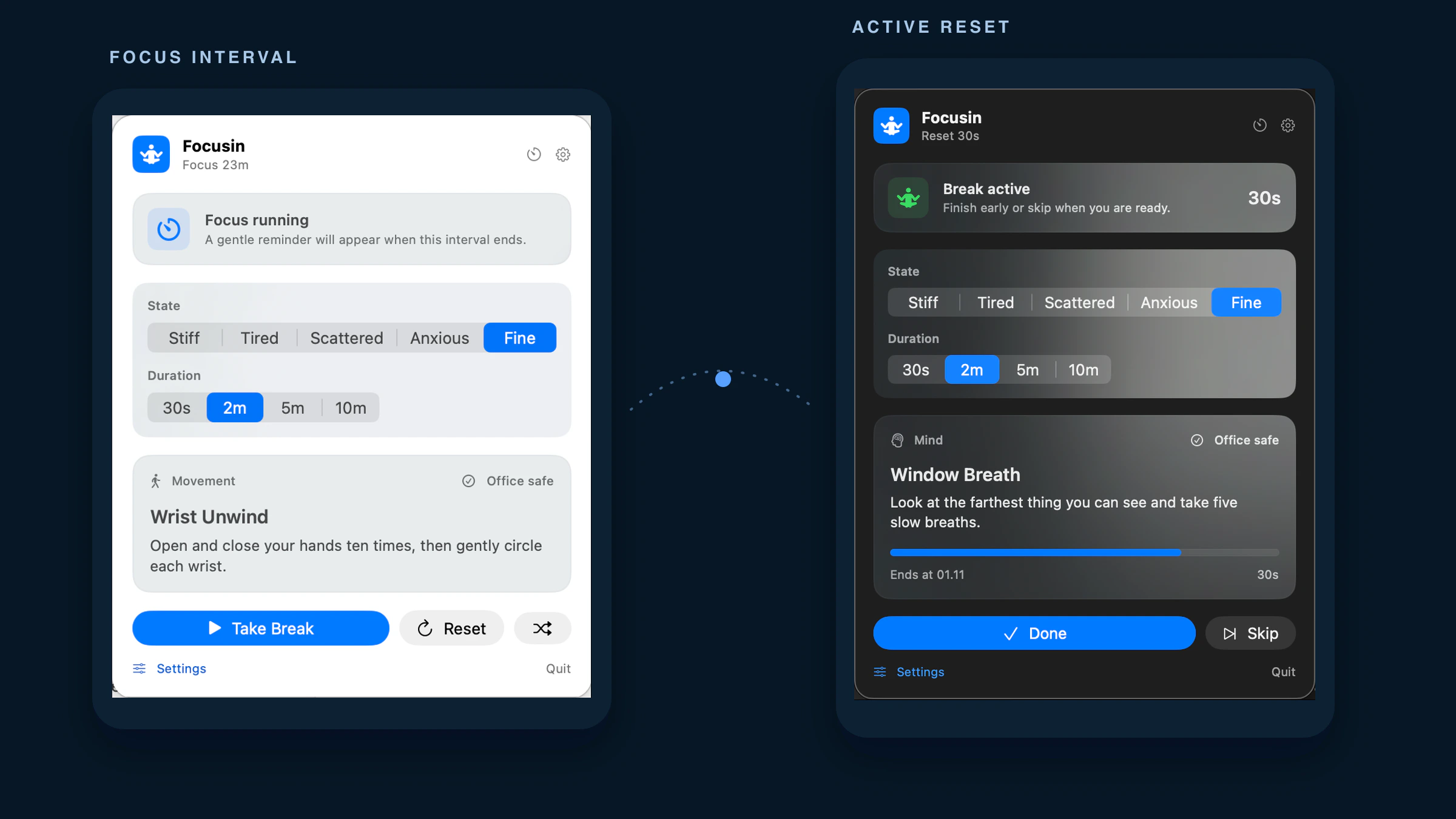
A native macOS focus-and-reset loop
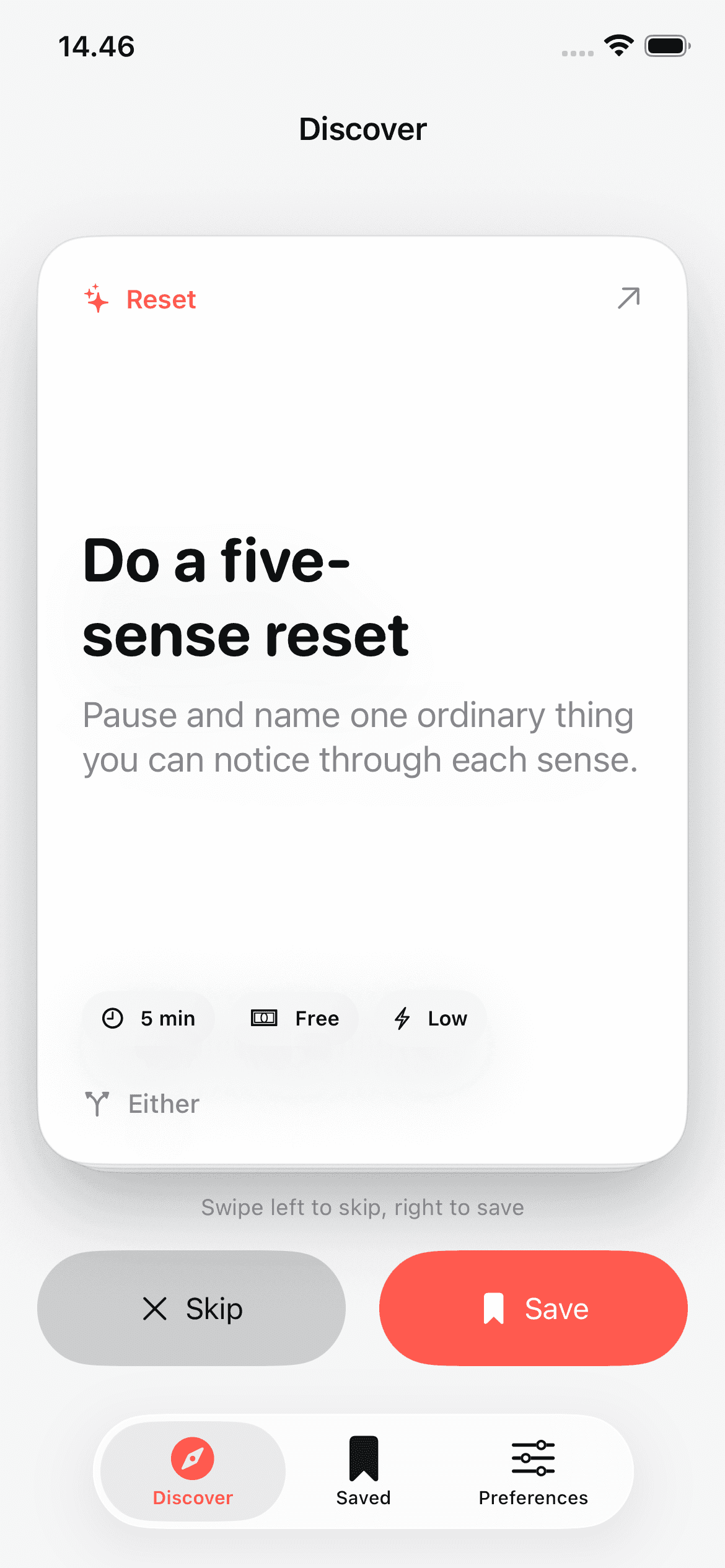
A native iOS activity deck for the moment between plans