01
The problem
Help solo builders move one monetizable skill toward first revenue without rewarding planning theater, while ensuring that progression changes only when submitted proof supports it.
Commercial proof, operator review, and reliable progression
A social execution product that helps solo builders turn one monetizable skill into first-revenue evidence through focused missions, accountable proof, and operator review.
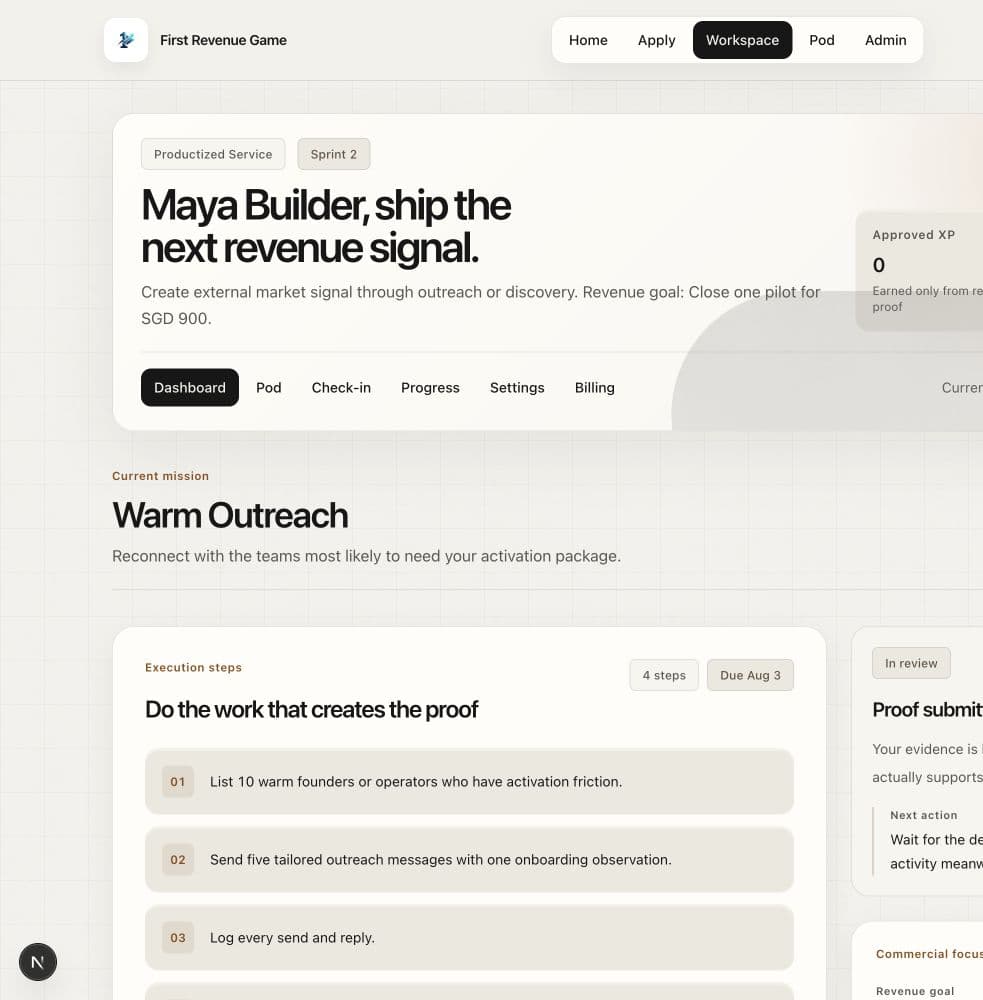
First Revenue Game turns a broad ambition into one commercially specific mission. Progress is earned through submitted evidence and an explicit review loop, so the interface stays accountable to what has actually happened.
Help solo builders move one monetizable skill toward first revenue without rewarding planning theater, while ensuring that progression changes only when submitted proof supports it.
Solo builders pursuing a first paid outcome, and operators responsible for reviewing commercial evidence and unlocking supported progression.
Independent product direction, UX/UI, Next.js shell and BFF, Java/Spring domain workflow, event reliability, observability, testing, and release evidence
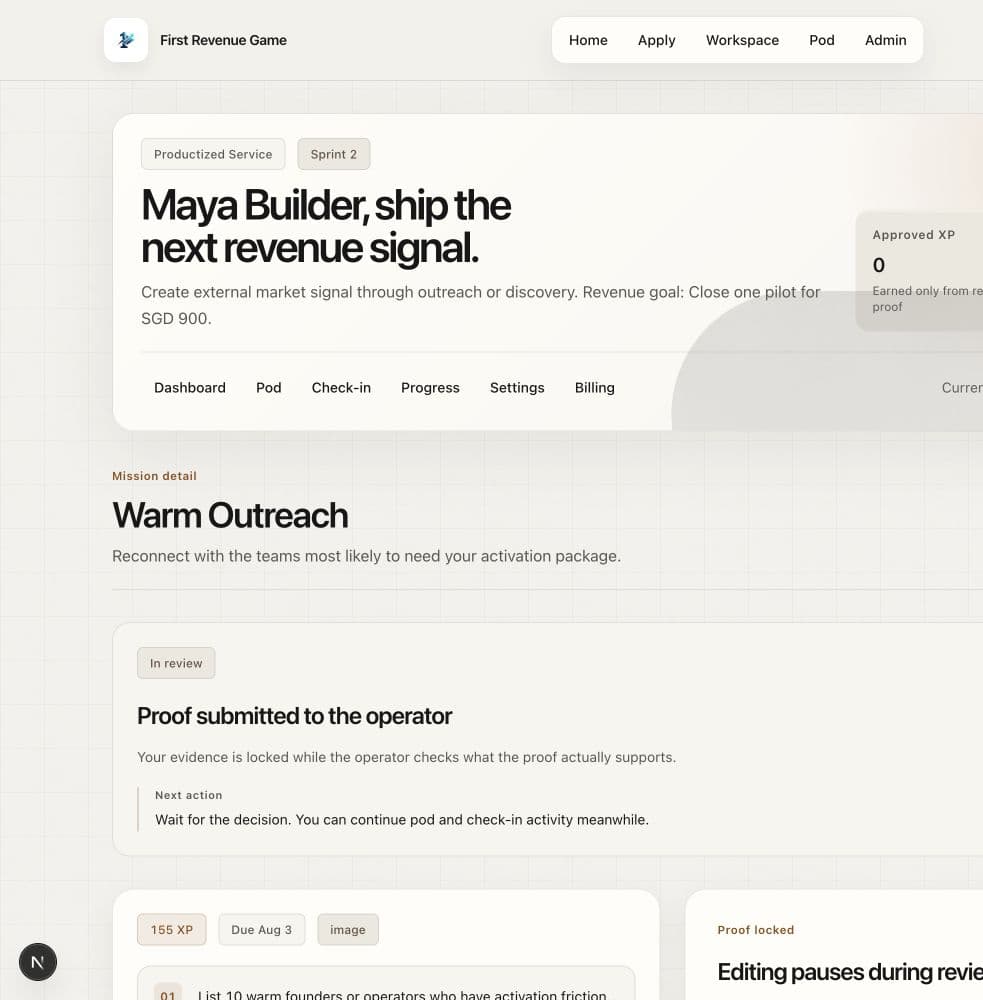
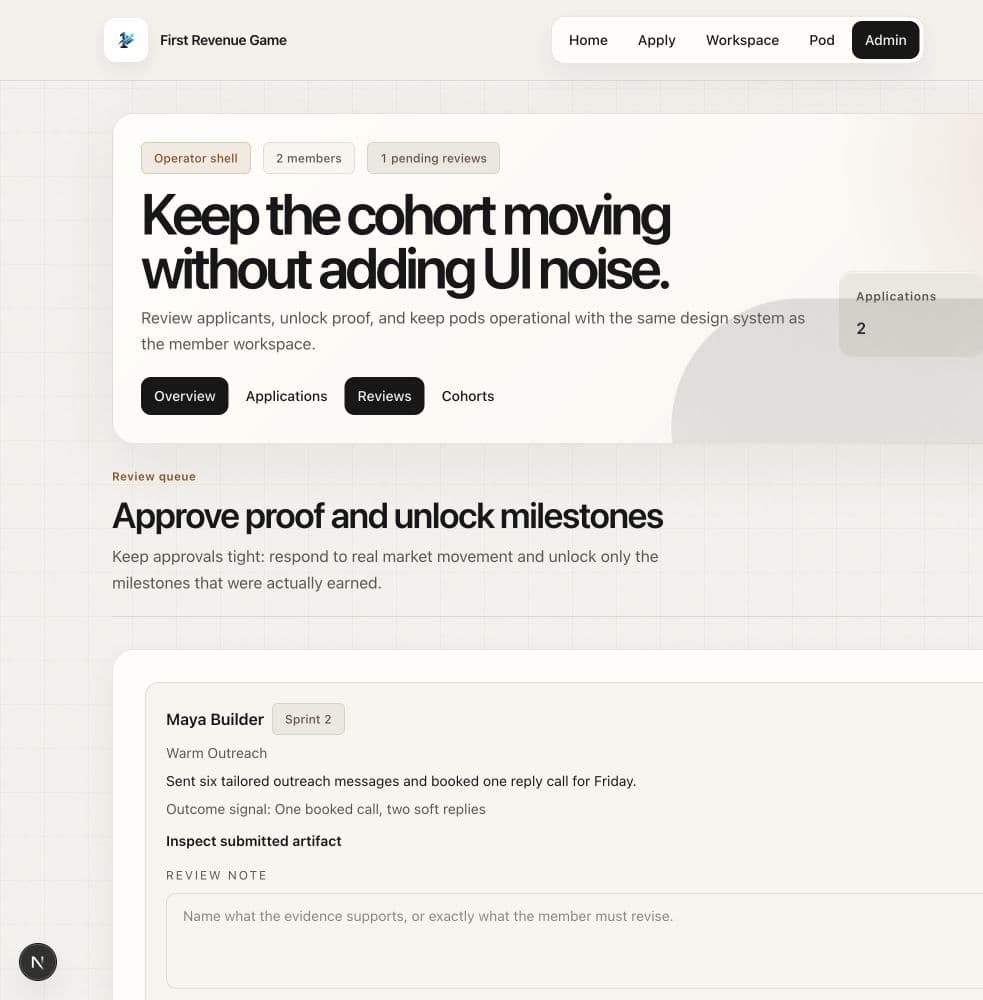
Centered the member experience on one commercially specific mission, external evidence, and an explicit reject-revise-approve recovery loop.
Migrated the authoritative workflow one vertical slice at a time, preserving the Next.js product contract while Spring Boot took ownership in the verified mode.
Signed short-lived viewer context across the BFF boundary and enforced role plus resource ownership inside the backend.
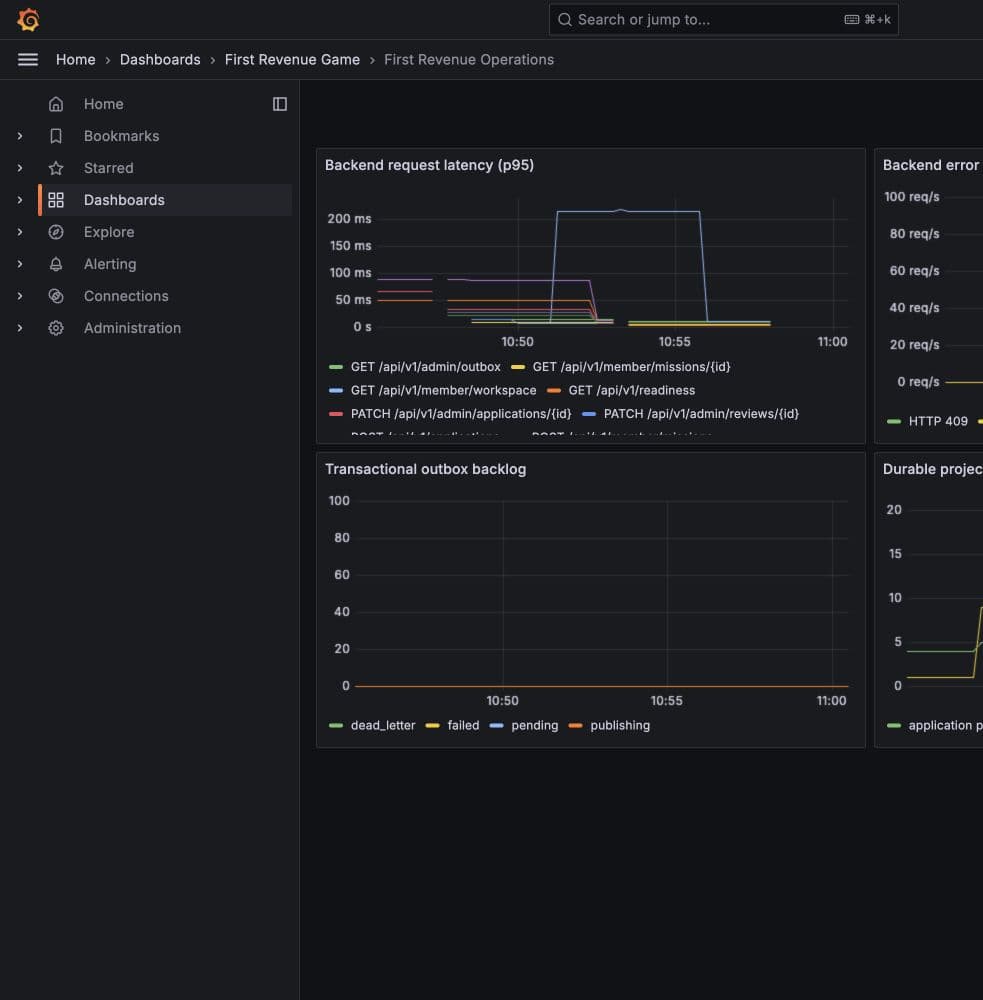
Committed workflow state and event intent atomically through a transactional outbox, then made projections idempotent by event ID.
Explore the other current projects where product thinking is carried through interface, architecture, testing, and release.

Portfolio intelligence, evidence-led research, and human judgment
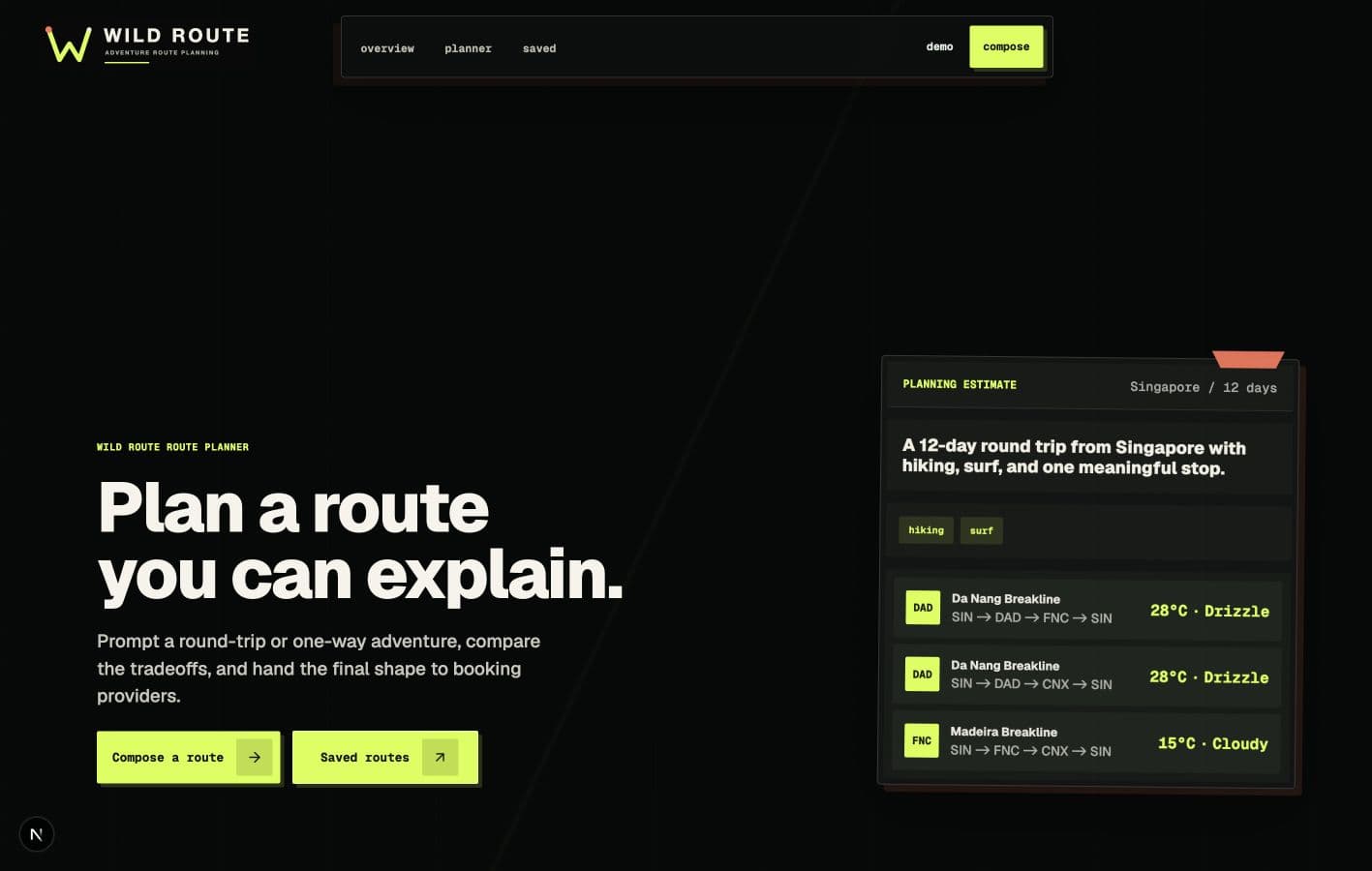
Prompt-first route planning for adventure travelers
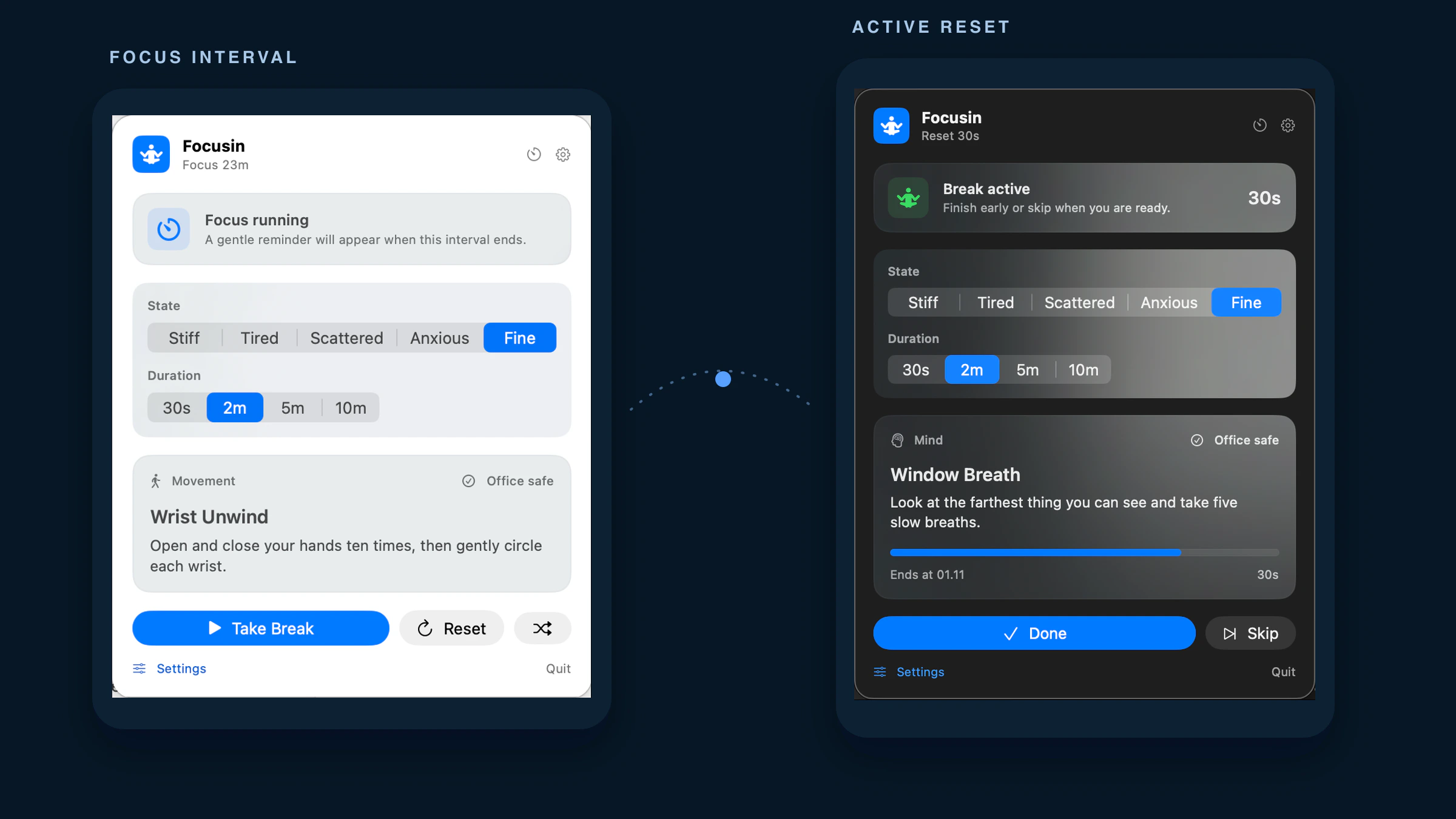
A native macOS focus-and-reset loop
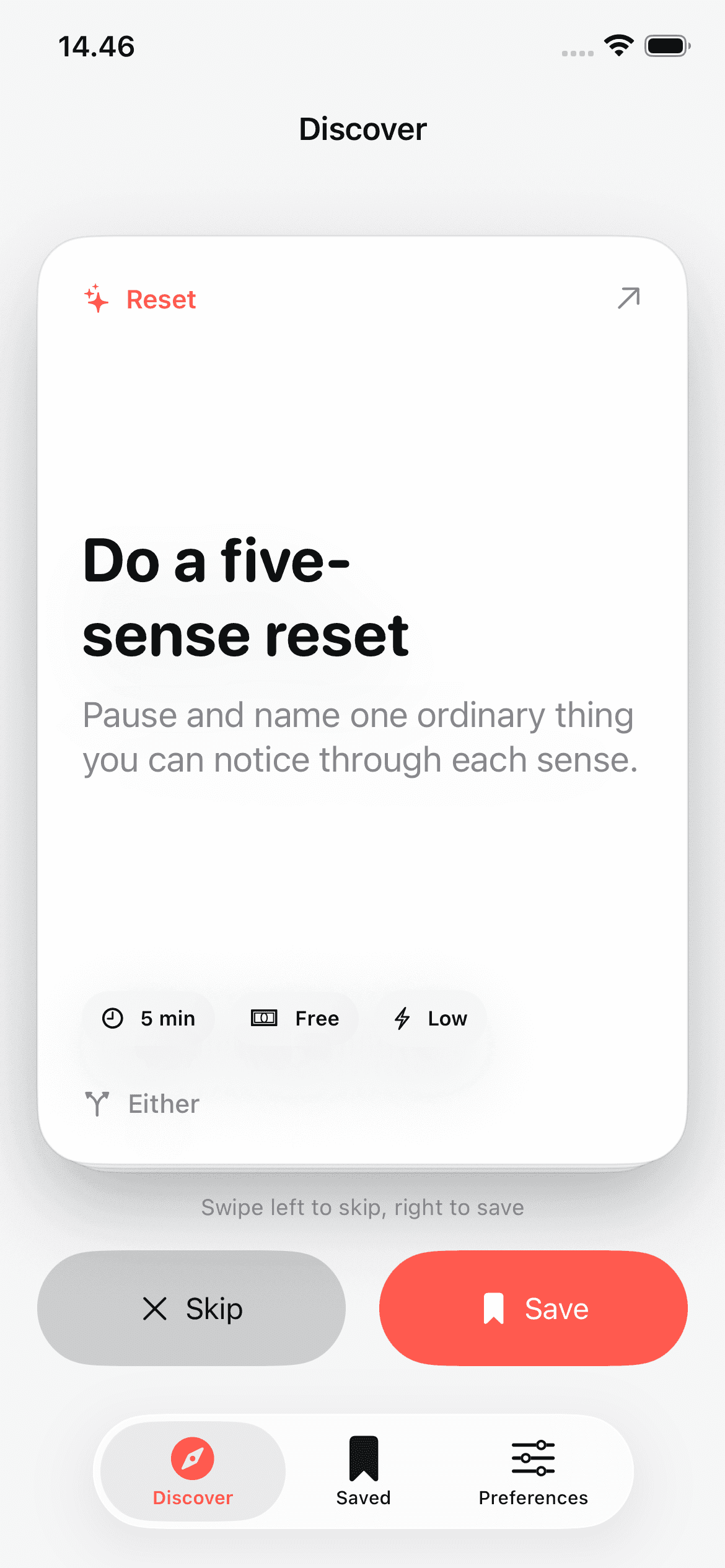
A native iOS activity deck for the moment between plans